May 2025
Echo
An open-source LLM fine-tuned on five years of my messages, to talk and think like me.
A digital clone of myself, built from five years of my own Telegram history. The model was never the hard part: most of the work went into turning a raw chat export into training data. I fine-tuned LLaMA 3 and Gemma 3 with Unsloth, then served the result through a few FastAPI services behind a Streamlit front end, all on one GPU box.
The experiment
I wanted to know what a model trained on my own messages would sound like.
It works, which is the funny part and the unsettling part at the same time.
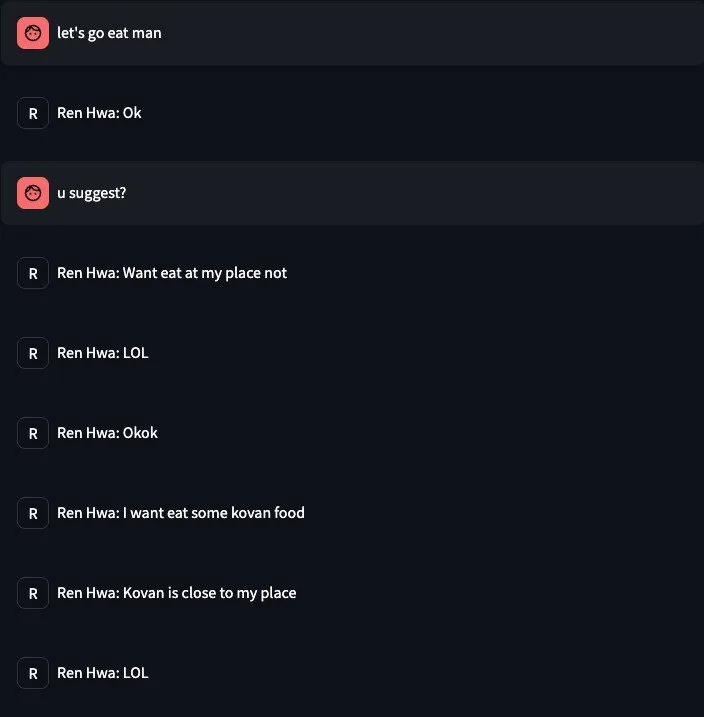
Five years of messages isn’t a dataset
A chat export is a pile of JSON with no notion of a turn, a topic or a reply. Most of the work was turning it into something a model could learn from: deciding what counts as a conversation, who said what, which messages to keep and how to pair a prompt with a response.
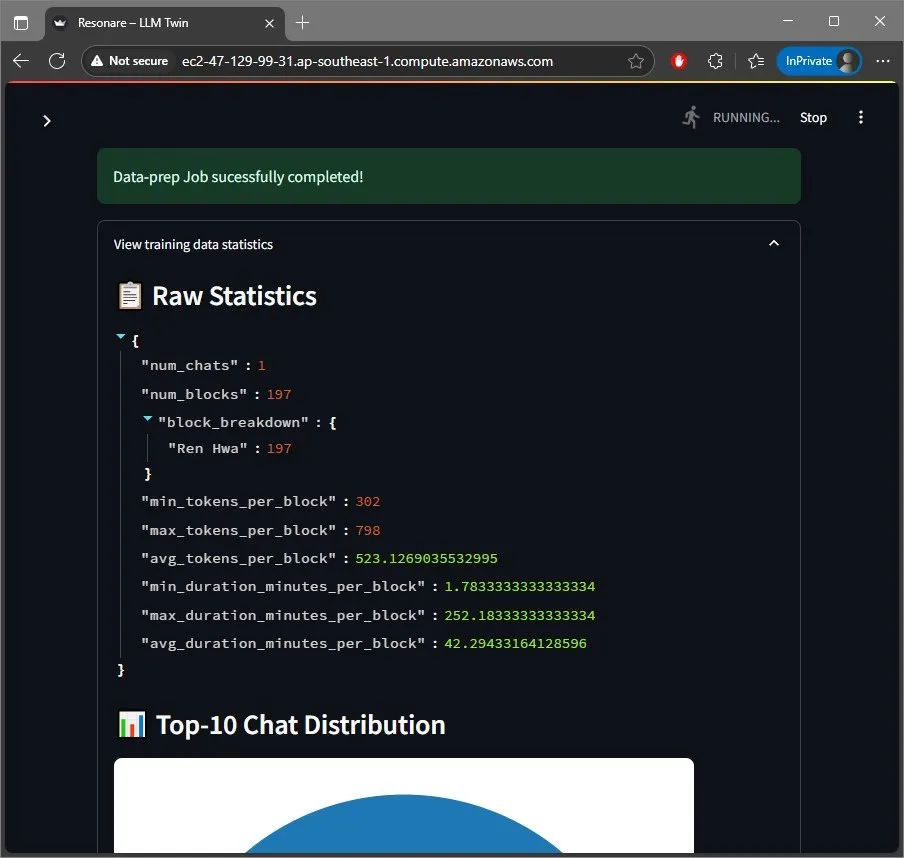
How I built it
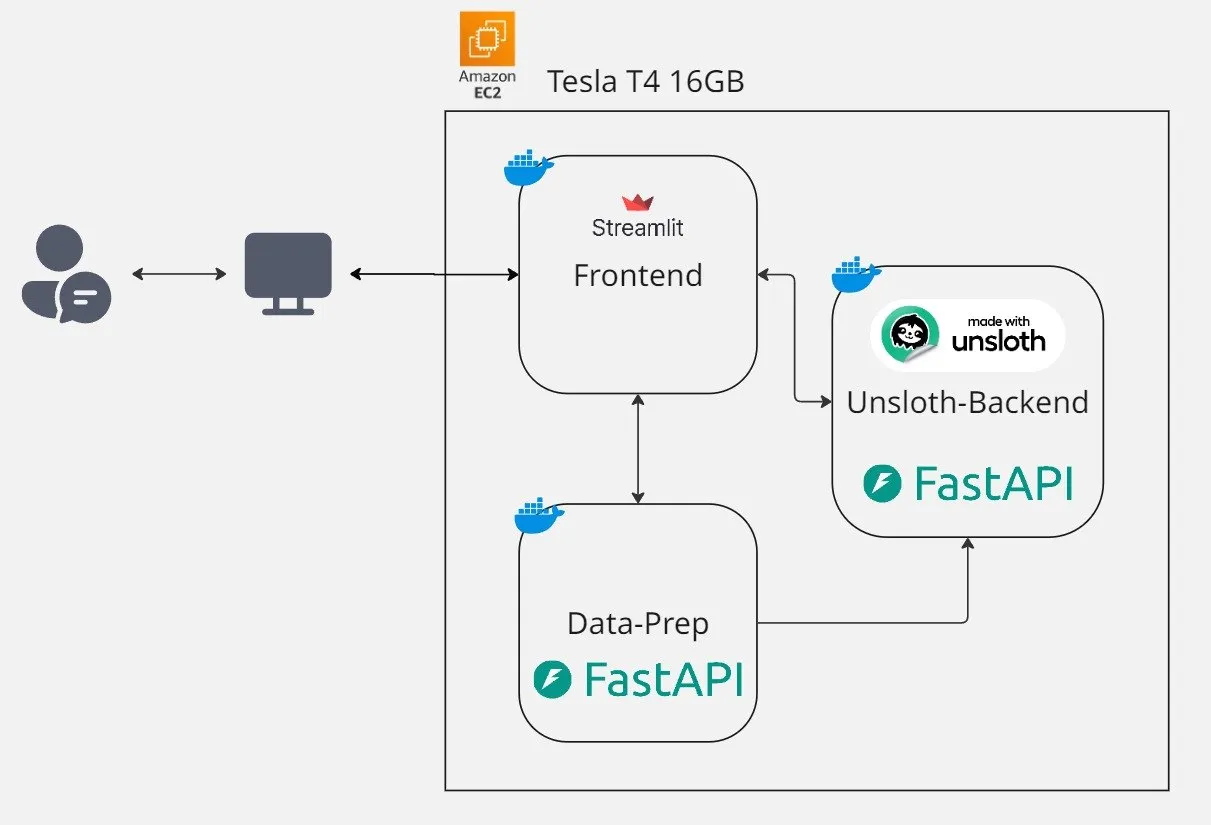
I fine-tuned open-source LLaMA 3 and Gemma 3 models with Unsloth. Its memory-efficient training path made the experiments practical on the hardware available to me, which was a single T4.
I split the application into small services: one for data preparation, one for training and inference, and a Streamlit front end over both. Everything runs in Docker on one machine.
Looking back
Training a model on private conversations made me think harder about whose data it really is. Half of every chat is someone else’s messages.
The data has its own limits too. A chat export reflects who I was speaking to and what conversations I kept, so the model can only learn from that sample.